Vietnam · The Green Plate
Vietnamese Herbs & Ingredients: A Field Guide to the Plate of Greens
The heaped basket of leaves that lands beside your noodles isn't decoration you politely ignore. It's the other half of the recipe, and learning it changes how everything tastes.
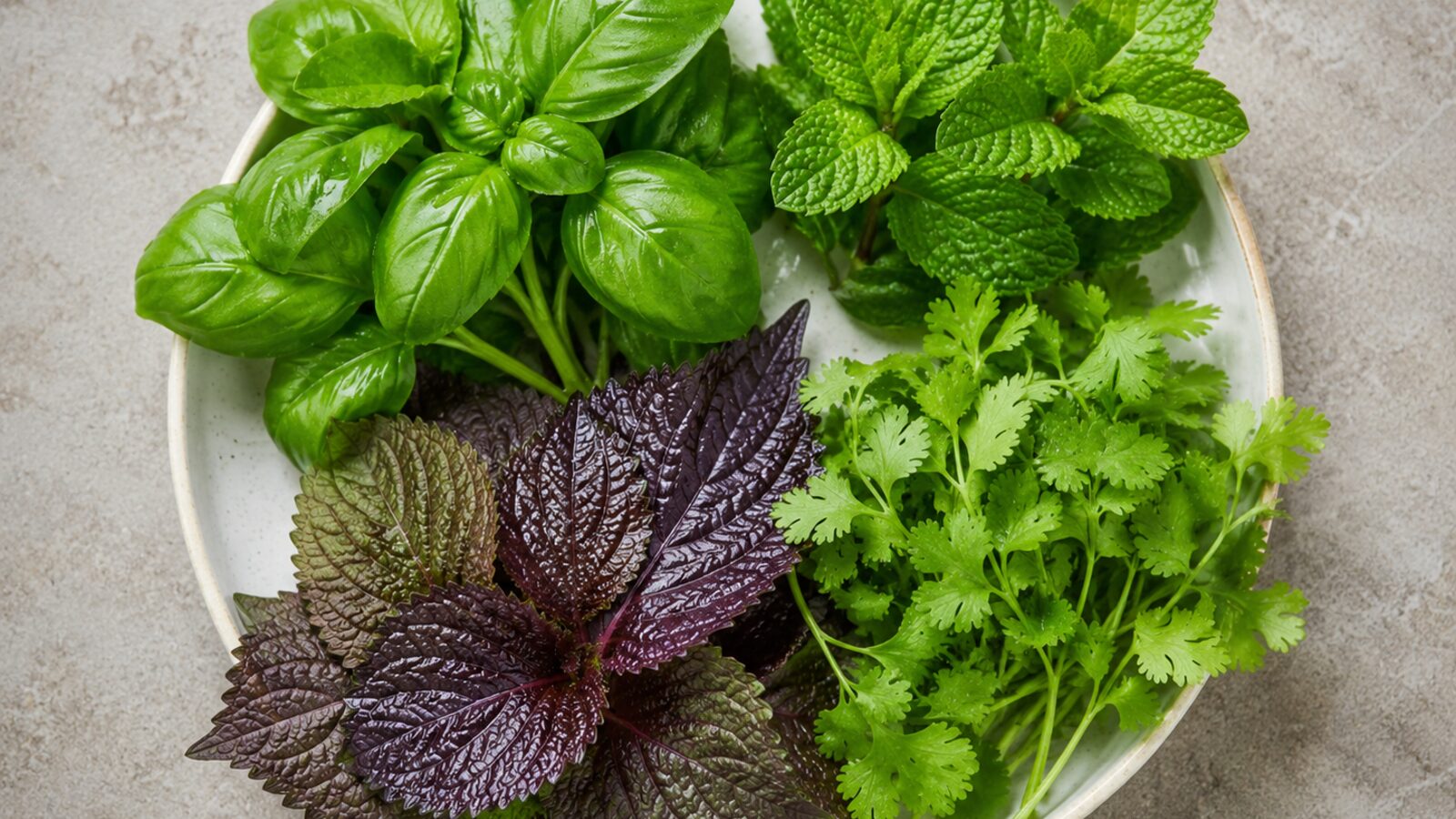
Somewhere in your first day or two in Hội An, a plate of raw leaves will arrive alongside your food, fresh and slightly wild-looking, and you'll do what most first-timers do: leave it politely untouched. Don't. That plate, rau sống, the "living greens", is one of the defining features of Vietnamese cooking, and skipping it means eating your meal at maybe half its intended flavour. Once you know what's on it, you'll never push it aside again.
The herbs you'll meet most
The exact mix changes with the dish and the season, but a handful of herbs turn up again and again. You don't need to memorise the names, just taste your way around the plate and notice what each one does.
| Herb | Vietnamese | Tastes like |
|---|---|---|
| Thai basil | húng quế | Sweet, anise/liquorice; classic with phở |
| Mint | húng lủi | Cool, clean, familiar |
| Perilla | tía tô | Purple-backed, minty-anise, a little citrus |
| Fish mint | diếp cá | Tangy, sour, love-it-or-hate-it |
| Vietnamese coriander | rau răm | Peppery, citrusy, slightly spicy |
| Coriander / cilantro | ngò / rau mùi | Bright, fresh, citrusy |
| Sawtooth herb | ngò gai | Bold coriander cousin; loves noodle soups |
Alongside the herbs you'll usually get lettuce, bean sprouts, sometimes shredded banana blossom or green mango, the crunchy, cooling supporting cast.
Think of the herb plate as a set of dials. Add a little of each and you're seasoning the dish to your own taste, bite by bite.
The core seasonings behind the flavour
Beyond the fresh greens, a small group of pantry ingredients gives Vietnamese food its unmistakable character.
Fish sauce (nước mắm)
The soul of the cuisine: a salty, savoury, deeply umami sauce made from fermented fish and salt. It seasons countless dishes and forms the base of nước chấm, the sweet-sour-chilli dipping sauce you'll meet everywhere. Important for vegetarians and anyone with a fish allergy: it hides in many "vegetable" dishes, so always ask.
Lime, chilli and garlic
The bright trinity. Lime for sourness, fresh chilli for heat (usually on the side, so you control it), garlic for depth. Together they balance the salty and the sweet.
Lemongrass, galangal and turmeric
Aromatics that flavour marinades, grills and broths, lemongrass (sả) is citrusy and fragrant, turmeric (nghệ) gives dishes like mì Quảng their golden colour.
Rice, in every form
Rice is the foundation, as steamed grains, as the noodles in phở and cao lầu, as the translucent wrappers of white rose and rice paper, and as the crunchy crackers crumbled over mì Quảng. Half of Vietnamese cooking is a study in what rice can become.
The finishing touches
Two small heroes worth naming: crispy fried shallots (that golden crunch on top of so many dishes) and roasted crushed peanuts (texture and nuttiness). Little things, big difference.
💡 How to actually use the herb plate
Three simple moves: (1) Tear and drop herbs into a noodle soup like phở just before eating. (2) Pile them in, a fistful of greens and sprouts stirred into a bowl of cao lầu. (3) Wrap, use lettuce or rice paper to bundle grilled meat with herbs, then dip. Add gradually and taste as you go; that's the whole art.
Why this matters more than it sounds
Vietnamese food is built on balance, salty, sour, sweet, bitter, hot, and on the contrast of a hot, savoury base against cool, raw freshness. The herb plate is how you complete that balance at the table, to your own taste. It's also why the food feels so light despite being deeply flavoured: you're eating a small salad with every bite. Understanding the greens is the difference between eating Vietnamese food and merely ordering it. It even makes you a more confident diner, see Vietnamese food etiquette and how to order.
Good to Know
🌿 The green plate, decoded
- It's an ingredient: add the herbs, don't admire them.
- Taste around the plate, each herb changes a dish differently.
- Fish sauce is everywhere, ask if you're vegetarian or allergic.
- Chilli is on the side, you control the heat.
- Crispy shallots + peanuts are the finishing magic.
Common mistakes
- Leaving the herb plate untouched. The single most common first-timer miss, you're skipping half the dish.
- Dumping all the herbs in at once. Add gradually and taste; some, like fish mint, are intense.
- Assuming vegetable dishes are fish-free. Fish sauce is a near-universal seasoning; ask.
- Fearing the chilli. It's separate, you decide how much (or none).
- Ignoring the crunchy bits. Fried shallots and peanuts are there for a reason; keep them.
Frequently asked questions
What is the plate of herbs served with Vietnamese food?
It's rau sống, fresh raw herbs and leaves (Thai basil, mint, perilla, fish mint, coriander, lettuce, bean sprouts) meant to be added to your dish, wrapped around fillings, or torn into soups. An ingredient, not a garnish.
What are the most common Vietnamese herbs?
Thai basil (húng quế), mint (húng lủi), perilla (tía tô), fish mint (diếp cá), Vietnamese coriander (rau răm), coriander (ngò) and sawtooth herb (ngò gai), plus lettuce and bean sprouts.
What is fish sauce and is it in everything?
Fish sauce (nước mắm) is a salty, savoury sauce made from fermented fish, the backbone of Vietnamese seasoning, present in many dishes and dips. Vegetarians and those with fish allergies should ask, as it's often used even in vegetable dishes.
How do I use the herbs?
Tear them into noodle soups, pile them into dishes like cao lầu, or use leaves and lettuce to wrap grilled meats and rice-paper rolls before dipping. Adding them fresh at the table is how the food is designed to be eaten.
The short version
The plate of greens is not garnish, it's the ingredient that lets you finish and balance each dish yourself. Learn a few herbs by taste (sweet Thai basil, cool mint, tangy fish mint), respect fish sauce as the savoury backbone, control your own chilli, and treat crispy shallots and peanuts as the keepers they are. Do that and Vietnamese food stops being a menu of dishes and becomes something you actively build, bite by fragrant bite.
Taste the herbs the way they're meant to be used
The best way to learn the green plate is to sit down with a proper Vietnamese meal and start tearing, wrapping and adding. If you're near Cửa Đại, AN Restaurant & Bar serves Hội An specialties and family dishes that come with the works, herbs, dipping sauces and all.
AN Restaurant & Bar · 56 Phan Tinh, Cửa Đại, Hội An · A Taste of Two Homes