Vietnam · Ordering
How to Order Food in Vietnam: A Calm, Practical Guide
You do not need to speak Vietnamese to eat brilliantly here. You need a handful of words, a willingness to point, and the confidence that comes from knowing how the whole ritual works.
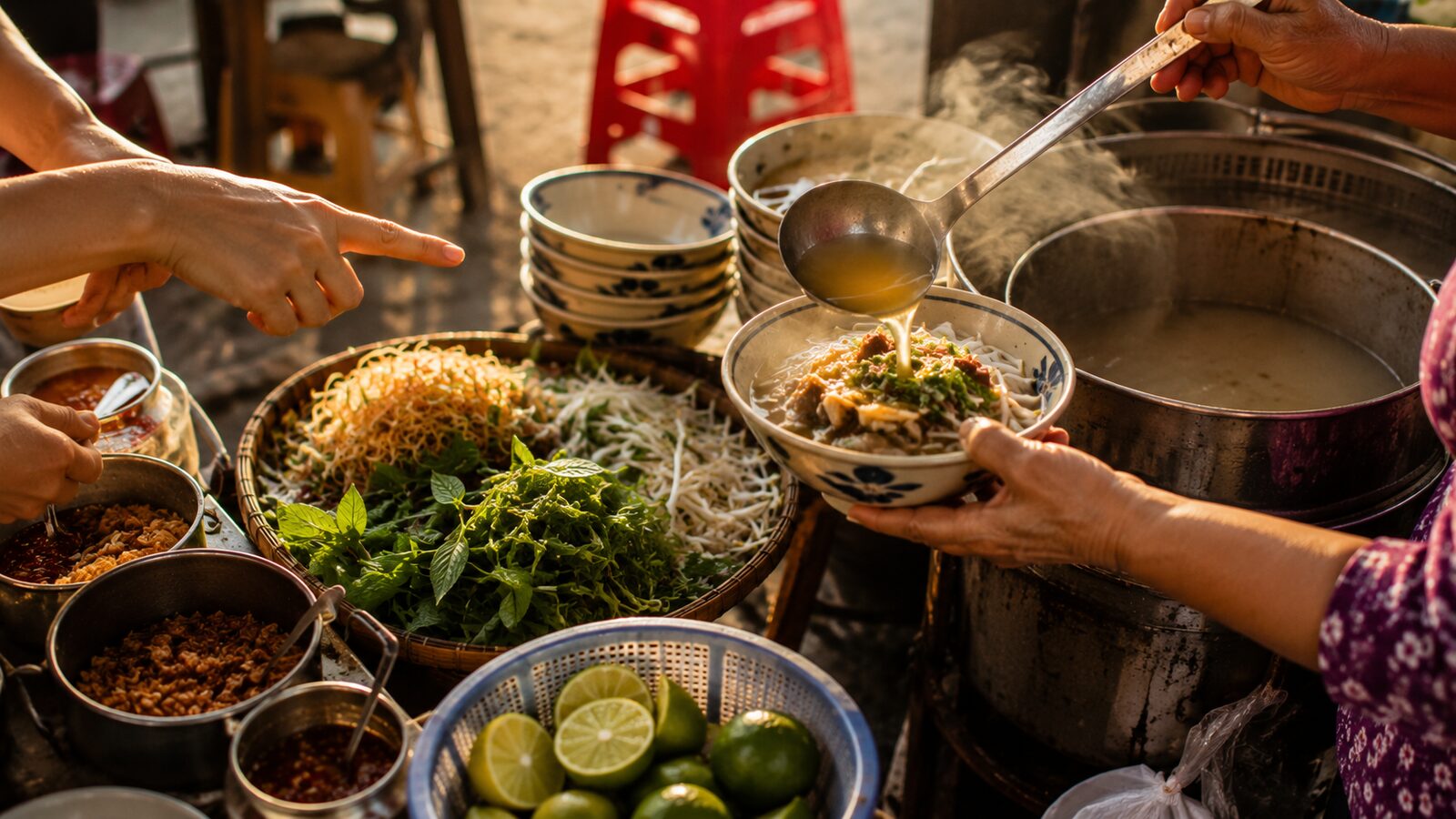
Here's the reassuring truth that should take all the pressure off your first meal: ordering food in Vietnam is easy, and nobody expects you to be fluent. Between pointing, smiling, photo menus, translation apps, and vendors who've cheerfully served travellers for years, you will not go hungry. What a little knowledge buys you isn't survival, it's ease. Knowing the rhythm of ordering, and a few key words, turns every meal from a small hurdle into part of the fun.
The words that do the heavy lifting
You don't need a phrasebook. These few expressions cover almost everything, and locals appreciate the effort even when your tones are wobbly.
| Vietnamese | Means | When to use it |
|---|---|---|
| Xin chào | Hello | Arriving, greeting |
| Cảm ơn | Thank you | Always |
| Cái này | This one | Pointing at a dish or menu |
| Một / hai / ba | One / two / three | Ordering portions |
| Không cay / ít cay | No chilli / a little spicy | Controlling heat |
| Tôi ăn chay | I eat vegetarian | See vegetarian food |
| Ngon quá! | Delicious! | Making a vendor's day |
| Tính tiền / thanh toán | The bill, please | Paying up |
Add a translation app for anything trickier (allergies, ingredient questions) and you're fully equipped.
Learn five words and use them badly. Vietnamese hosts will meet your effort with warmth every time.
How the ordering ritual actually works
At a street stall
Many stalls make just one or two things, a pot of one noodle soup, a grill of one meat. Often you simply sit down on the low plastic stools and you're served the house dish, or you point at what the person next to you is happily eating. You eat, then pay afterward, usually in cash. Don't overthink it; the simplicity is the point. More on this world in street food vs restaurants.
At a sit-down restaurant
Closer to what you're used to: you're seated, given a menu (often with English and photos in tourist areas), and you order dish by dish. Remember that meals are communal, order a few dishes for the middle of the table to share rather than one plate each.
At a market
Markets are a feast of stalls. Walk, look, point, and buy small amounts from several vendors. It's the tasting-menu approach, and a wonderful way to try a lot for a little.
Spice, dietary needs and allergies
Two pieces of good news. First, chilli is usually served separately in Vietnam, so dishes are easy to keep mild, say "không cay" and add your own heat. Second, vegetarian food is well understood, "tôi ăn chay" opens the door, though watch for hidden fish sauce (see vegetarian food in Hội An).
Allergies need more care. Fish sauce, shrimp paste, peanuts and shellfish are woven through Vietnamese cooking, sometimes invisibly. If you have a serious allergy, don't rely on a single spoken phrase: write it down clearly in Vietnamese (a translation app or a printed allergy card is ideal), show it to the kitchen, and confirm. It's worth the extra minute.
💡 The three-tool ordering kit
Carry three things and you can order anywhere: (1) a few small đồng notes for cash-only stalls, (2) a translation app for allergies and questions, and (3) the willingness to point and smile. That combination handles everything from a roadside noodle pot to a full restaurant menu.
Paying
At stalls you generally pay after eating, catch the vendor's eye and say "tính tiền" or mime writing in the air. Cash (in đồng) is king at smaller places, though card and QR payments are increasingly common at restaurants. Keep small notes: it's faster and saves the "no change" shuffle. On what things should cost, see Hội An food prices explained, and on tipping, the short version is: not obligatory, but a kind gesture for good service.
Good to Know
🗣️ Ordering, made easy
- Pointing is perfect: "cái này" + a point orders almost anything.
- Keep it mild: "không cay"; chilli is on the side anyway.
- Vegetarian: "tôi ăn chay", but ask about fish sauce.
- Allergies: write them down in Vietnamese; don't rely on speech alone.
- Pay after at stalls; carry small cash; "tính tiền" for the bill.
Common mistakes
- Waiting for a menu at a one-dish stall. Often there isn't one, just sit and be served, or point.
- Assuming "no meat" means vegetarian. Fish sauce hides everywhere; say "ăn chay" and ask.
- Relying on a spoken phrase for a serious allergy. Write it down and confirm with the kitchen.
- Only carrying big notes. Small stalls can't break them; keep small đồng.
- Being shy. A clumsy "xin chào" and a point beats silent hovering every time.
Frequently asked questions
How do you order if you don't speak Vietnamese?
Pointing works almost everywhere, and a smile goes a long way. Many tourist menus have English or photos, and a translation app helps at stalls. A few words, hello, thank you, this one, the bill, smooth everything.
How do I ask for food that isn't spicy?
Say "không cay" (no chilli) or "ít cay" (a little spicy). Chilli is usually on the side, so keeping a dish mild is easy, add heat yourself.
How do you ask for the bill?
Say "tính tiền" or "thanh toán", or mime writing in the air. At most stalls you pay after eating, usually in cash, small đồng notes speed it up.
How do you order at a street stall?
Many stalls do one or two dishes, so you often just sit and are served, or point at what others have. Sit on the low stools, eat, and pay afterward. Busy stalls are usually the freshest.
The short version
Ordering in Vietnam runs on pointing, a smile, and five easy words: hello, thank you, this one, no chilli, and the bill. Sit down at stalls and pay after; share dishes at restaurants; write down any serious allergy rather than trusting a phrase; and carry small cash. Do that and the language barrier all but disappears, leaving you free to do the only thing that really matters here, which is eat.
A gentle place to find your feet
If you'd like to ease into Vietnamese food with a menu you can read and staff happy to guide you, AN Restaurant & Bar in Cửa Đại is a relaxed spot to start, Vietnamese family dishes and Hội An specialties, plus familiar options, with no pressure and clear prices.
AN Restaurant & Bar · 56 Phan Tinh, Cửa Đại, Hội An · A Taste of Two Homes