Vietnam · At the Table
Vietnamese Food Etiquette: How to Eat Like a Considerate Guest
Nobody expects a visitor to get everything perfect, and Vietnamese hosts are famously forgiving. But a handful of small courtesies will make you a warmer guest and a more relaxed diner.
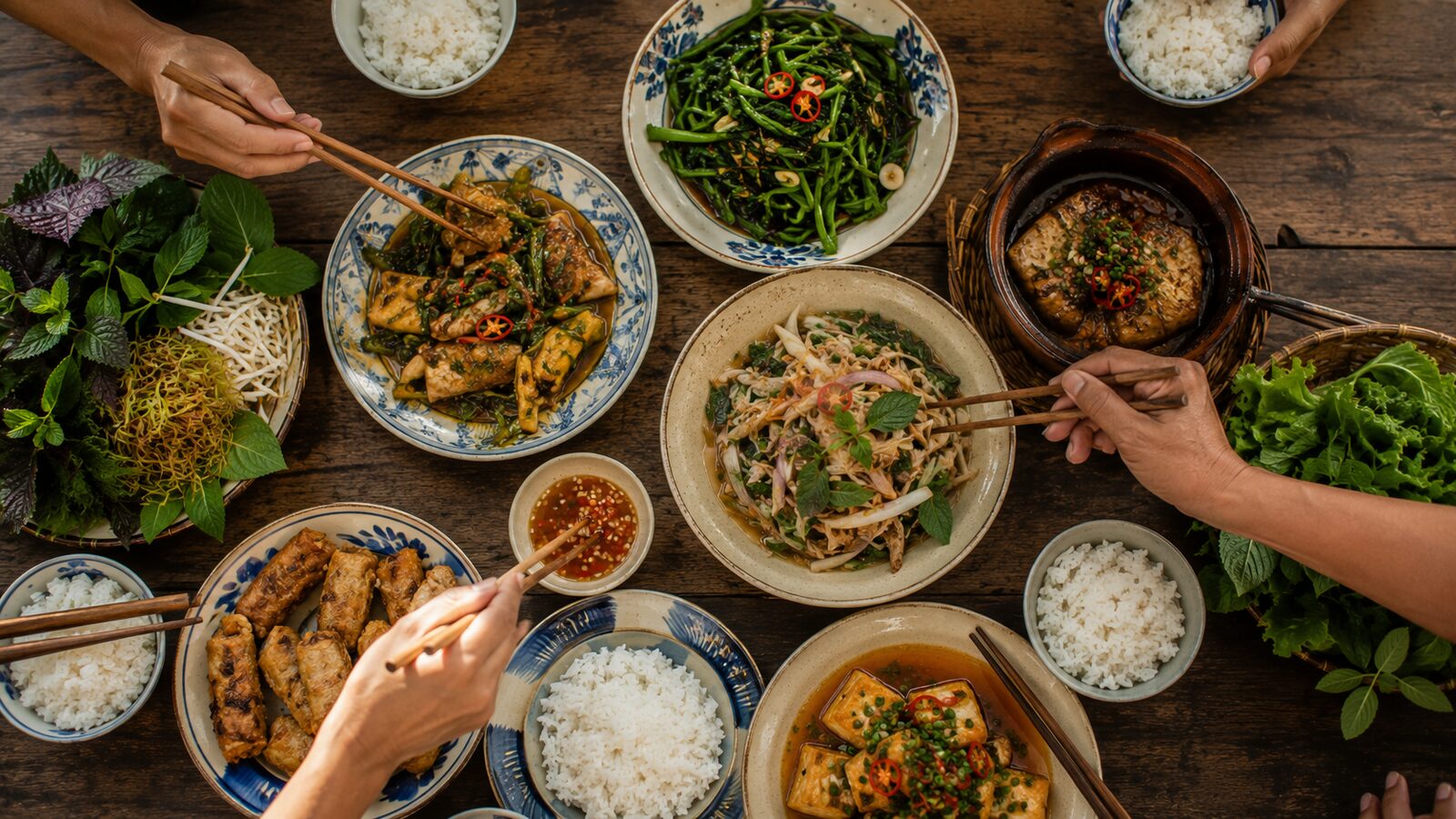
Let's set the anxiety aside first: Vietnamese food etiquette is not a minefield, and no one is watching you, ready to be offended. Vietnamese hosts are among the most generous and easygoing you'll meet, and the single most important "rule" is simply to eat with enthusiasm and share generously. That said, a few genuine customs, some practical, one or two meaningful, will help you feel at home at the table and show real respect for the culture you're eating in.
The one thing that actually matters: chopsticks
If you remember nothing else, remember this: never stand your chopsticks upright, stuck into a bowl of rice. Two chopsticks planted vertically in rice look like the incense sticks burned for the dead at funerals and on ancestral altars, it's an image associated with death, and it can unsettle people. When you pause, lay your chopsticks flat across the top of your bowl or on a chopstick rest.
A few other chopstick courtesies, none of them fussy:
| Do | Don't |
|---|---|
| Rest them across your bowl when pausing | Stand them upright in rice |
| Use the serving spoon or clean ends for shared plates | Pass food chopstick-to-chopstick (a funeral rite) |
| Keep them still and quiet | Tap bowls, point, or wave them around |
| Lift your rice bowl closer to your mouth | Leave the bowl on the table and hunch over it |
Get the chopsticks-in-rice thing right, and you've handled the only piece of etiquette that carries real weight.
Dining is communal, eat like it
A Vietnamese meal is a shared affair. Dishes land in the middle of the table and everyone takes a little at a time into their own small rice bowl. A few gentle norms make the sharing graceful:
- Take modest amounts. Serve yourself a little at a time rather than piling a plate, it leaves plenty for everyone and lets you try more dishes.
- Use the serving spoon where there is one; if not, it's polite to use the clean (blunt) ends of your chopsticks to take from shared plates.
- Serve others first. Offering the best pieces to elders and guests before yourself is a lovely, common gesture.
- Elders first. It's customary to let the oldest person begin, and to invite the table to eat before you start.
This communal style is exactly why ordering a shared spread beats one-plate-each, the format is the etiquette. For help navigating menus, see how to order food in Vietnam.
Rice, soup and the herb plate
Practical table mechanics that make eating easier:
- Lift your rice bowl toward your mouth rather than bending down to the table, it's normal and neater.
- Use the spoon for soup and broth (chopsticks for the solids, spoon for the liquid); slurping noodles is perfectly acceptable.
- The herb plate is an ingredient. Tear the fresh herbs into your bowl, wrap grilled meats in lettuce and rice paper, and build each bite, see Vietnamese herbs and ingredients.
- Dipping sauces are shared but personal, pour a little into your own small dish rather than dipping half-eaten food back into the communal bowl.
Drinking and toasting
Drinking is sociable and warm. If you're sharing beer or rice wine, it's polite to pour for others and let them pour for you, rather than only serving yourself. Toasts are frequent and cheerful, the classic is "một, hai, ba, dô!" (one, two, three, cheers!). When clinking glasses with an elder or someone senior, it's a nice sign of respect to hold your glass slightly lower than theirs. None of this is heavy or formal; it's just part of the fun.
💡 The mindset that beats any rulebook
Watch the table and follow along half a beat behind your hosts. Eat with obvious pleasure, accept what you're offered, share generously, and say "cảm ơn" (thank you). That attitude covers far more ground than memorising rules, and it's exactly what your hosts hope to see.
Paying the bill
Splitting the bill evenly is less traditional in Vietnam than in the West, though it's increasingly common among younger people and travellers. Often the person who invited, or the eldest or most senior at the table, will insist on paying for everyone, a genuine expression of hospitality. If you're the guest, a sincere offer to contribute is polite, but graciously accepting a host's treat is also completely fine (and returning the gesture next time is a warm move). On tipping, see our note in Hội An food prices: not obligatory, but increasingly appreciated.
Good to Know
🥢 Etiquette, distilled
- Never stand chopsticks upright in rice; rest them on the bowl.
- Share modestly from central dishes; use the serving spoon.
- Elders first; invite the table to eat before you start.
- Pour for others, toast with "một, hai, ba, dô!"
- Relax: enthusiasm and warmth matter more than perfection.
Common mistakes
- Chopsticks upright in the rice. The one genuine faux pas worth avoiding, it evokes funeral incense.
- Loading your own plate high. Take a little at a time; the table is meant to be shared.
- Starting before the elders. A brief "please eat" and letting seniors begin goes a long way.
- Only filling your own glass. Pour for others; it's part of the ritual.
- Over-thinking it. Anxiety is the real enemy of a good meal, hosts value warmth over flawless form.
Frequently asked questions
What should you not do with chopsticks?
Don't stand them upright in rice, it resembles funeral incense and is considered unlucky. Also avoid passing food chopstick-to-chopstick, tapping bowls, or waving them. Rest them across your bowl or on a rest.
Is Vietnamese dining communal?
Yes. Dishes are shared in the centre and everyone takes a little at a time into their own rice bowl. Use the serving spoon or the clean ends of your chopsticks, and take modest amounts.
How does toasting work?
It's social and frequent, a common cheer is "một, hai, ba, dô!" Pour drinks for others rather than only yourself, and hold your glass slightly lower than an elder's as a sign of respect.
Who pays the bill?
Often the person who invited, or the eldest/most senior, pays for the table; even splitting is less traditional but common among younger people. Offering to pay is polite; accepting a host's treat is also fine.
The short version
Vietnamese table etiquette rewards warmth over precision. Keep your chopsticks off the "upright in rice" taboo, share modestly from the middle of the table, let elders begin, pour for others, and eat with visible pleasure. Do that and you'll be a welcome guest anywhere in Vietnam, and you'll enjoy the meal more for relaxing into its generous, communal spirit.
Somewhere easy to practise all this
A relaxed, welcoming table is the best place to settle into Vietnamese dining. If you're near Cửa Đại, AN Restaurant & Bar is an easy-going spot to share a spread of Vietnamese family dishes and Hội An specialties, with friendly staff happy to help if you're finding your feet at the table.
AN Restaurant & Bar · 56 Phan Tinh, Cửa Đại, Hội An · A Taste of Two Homes