Hội An · Meat-Free
Vegetarian Food in Hội An: Easier Than You Think
People arrive in Vietnam worried that vegetarians go hungry. In Hội An, the opposite is true, this is a town with a centuries-deep meat-free tradition, if you know the one word to look for.
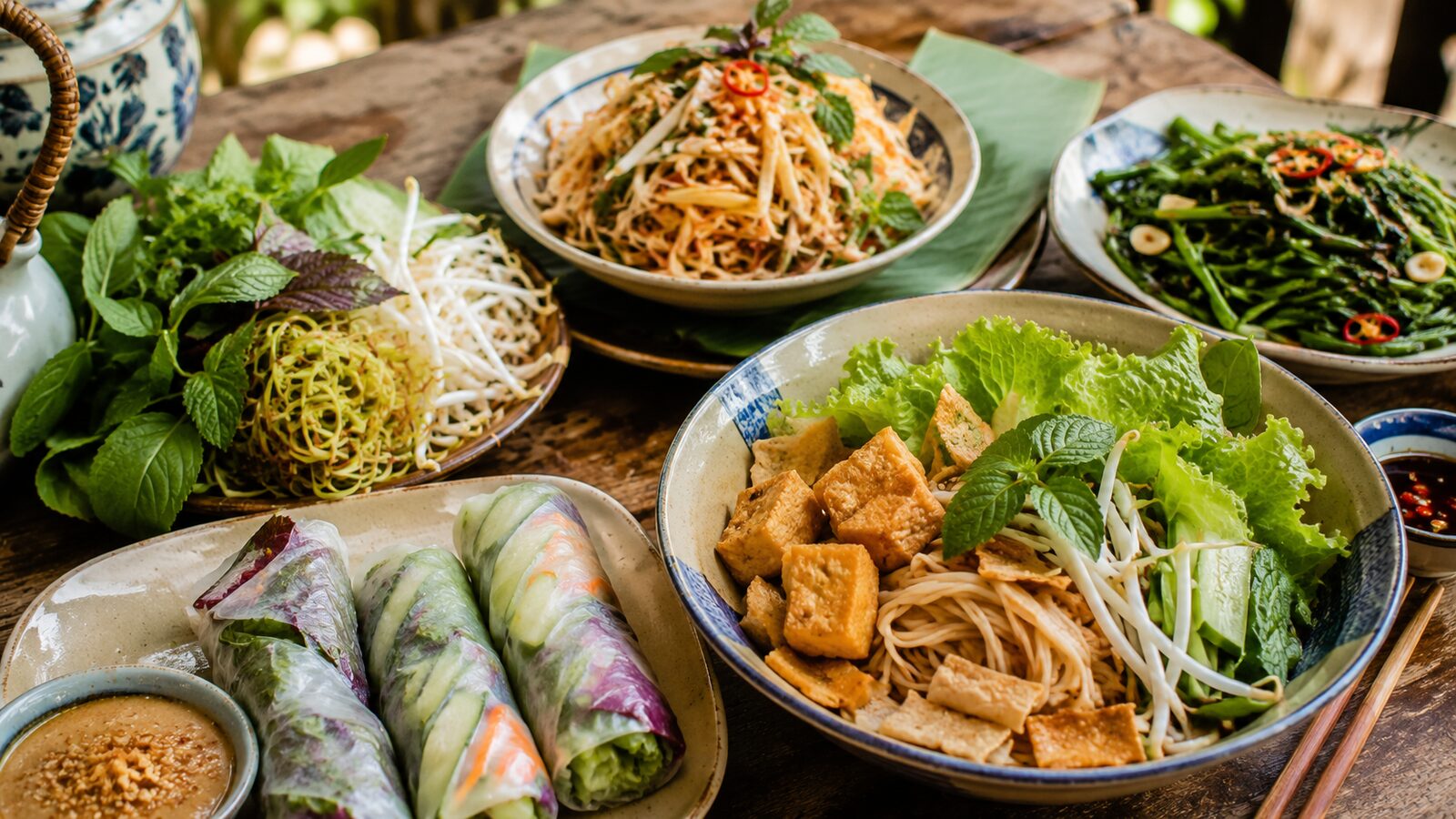
There's a quiet myth among travellers that eating vegetarian in Vietnam means a lifetime of plain rice and apologetic side salads. It's simply not true, and nowhere disproves it faster than Hội An. Vietnam has one of Asia's richest vegetarian traditions, rooted in Buddhism, and this town runs it deep. The catch isn't scarcity; it's knowing how the system works, and watching for one sneaky ingredient.
Why vegetarian food runs deep here
The backbone of Vietnamese vegetarianism is Buddhist. Many practising Buddhists eat ăn chay, strictly vegetarian, often vegan, on the 1st and 15th days of each lunar month, and some for longer stretches. That regular, widespread demand means most towns, Hội An included, have a genuine ecosystem of vegetarian kitchens rather than a token option or two. Cooks here know how to make food taste complete without meat, because they've been doing it for generations.
A lovely, practical consequence: on those lunar days (the 1st and 15th), dedicated vegetarian restaurants get packed, sometimes so busy they close the next day to rest. If you can, eat vegetarian on one of those days; the atmosphere is wonderful and the cooking is at its most confident.
Look for one word on a sign, chay, and a whole layer of the town opens up.
The word that unlocks everything: chay
Chay means vegetarian. Once you can spot it, you'll see it everywhere:
- Quán chay / nhà hàng chay, a vegetarian eatery or restaurant.
- Cơm chay, vegetarian rice (a plate of rice with assorted meat-free dishes).
- Cao lầu chay, mì Quảng chay, meat-free versions of the local noodle classics.
To order for yourself, "tôi ăn chay" means "I eat vegetarian." It's one of the most useful phrases you can carry, more in how to order food in Vietnam.
What to actually order
Vegetarian Hội An isn't a separate, lesser menu, it's the same beloved dishes, rebuilt around tofu, mushrooms and vegetables.
| Dish | What you get |
|---|---|
| Cao lầu chay | Hội An's signature noodles with tofu and greens instead of pork, see what to eat in Hội An |
| Mì Quảng chay | Turmeric noodles, veg broth, peanuts, herbs, rice cracker |
| Fresh spring rolls (chay) | Herbs, vermicelli, tofu or mushroom in rice paper |
| Đậu hũ sốt cà | Tofu in a savoury tomato sauce, a homely staple |
| Rau muống xào tỏi | Morning glory greens stir-fried with garlic |
| Nộm / gỏi (chay) | Bright salads, banana flower, green papaya, herbs |
| Lẩu chay | Vegetable-and-mushroom hotpot for sharing |
Vietnamese cooks are also masters of "mock meat", tofu and mushroom preparations that mimic the texture of pork or chicken. Some travellers love it; others prefer the straightforwardly vegetable dishes. Both are easy to find.
The one thing to watch: hidden fish sauce
Here's the trap. A dish can look entirely vegetable, stir-fried greens, a bowl of noodles, and still be seasoned with fish sauce (nước mắm) or shrimp paste (mắm tôm), which are the backbone of everyday Vietnamese seasoning. For a strict vegetarian or vegan, "no meat" isn't enough.
Two clean solutions:
- Eat at a dedicated chay restaurant. Everything is meat-free (usually vegan), so you can relax and order anything.
- At a regular restaurant, ask. Request the dish "with soy sauce, no fish sauce" (and, if vegan, no egg, trứng). Most kitchens can accommodate this happily if you ask before ordering.
💡 Vegan vs vegetarian, say which
Because Buddhist chay cooking is often fully vegan by default, dedicated chay spots are a dream for vegans. At mixed restaurants, be specific: "no meat, no fish sauce, no egg, no dairy." Spelling it out once at the start saves confusion, and disappointment when the "vegetable" fried rice arrives flecked with pork.
Where to look
Scan signs for the word chay and you'll find dedicated vegetarian eateries scattered around town and near the markets and pagodas. Beyond those, most tourist-facing restaurants in Hội An, including many that aren't vegetarian at all, keep a real vegetarian section, not just a token salad. That's part of what makes the town so easy: even a mixed group where one person is vegetarian rarely has to pick a separate restaurant.
That's the approach at AN Restaurant & Bar in Cửa Đại, too: vegetarian plates sit alongside Vietnamese family dishes, seafood and German specialties, so a vegetarian and a seafood-lover can share one comfortable table near the beach.
Good to Know
🌱 Eating meat-free in Hội An
- Learn one word: chay = vegetarian. It's your key to the whole scene.
- Say the phrase: "tôi ăn chay", I eat vegetarian.
- Watch the sauce: ask for soy instead of fish sauce; mention no egg if vegan.
- Lunar 1st & 15th: chay restaurants are busiest and best, go early.
- Local classics count: seek out cao lầu chay and mì Quảng chay, not just salads.
Common mistakes
- Assuming "vegetable" means vegetarian. Fish sauce and shrimp paste hide in plain sight, always ask.
- Not saying vegan when you mean vegan. "Vegetarian" may still include egg; spell it out.
- Only eating salads. You'll miss the best of it, the reimagined noodle classics are the point.
- Skipping dedicated chay spots. They're the one place you can order anything without a second thought.
- Forgetting the lunar days. The 1st and 15th are when vegetarian cooking shines, plan around them.
Frequently asked questions
Is it easy to eat vegetarian in Hội An?
Yes. Vietnam has a strong Buddhist vegetarian tradition, and Hội An has many dedicated "chay" eateries plus vegetarian versions of local dishes. Just watch for hidden fish sauce and shrimp paste, which you can ask about.
How do I say I'm vegetarian in Vietnamese?
Say "tôi ăn chay" (I eat vegetarian), and look for signs reading "chay", "quán chay", "nhà hàng chay" or "cơm chay." For strict vegan, add no egg (trứng) and no fish sauce (nước mắm).
What vegetarian dishes are typical?
Cao lầu chay and mì Quảng chay with tofu, fresh spring rolls, tofu in tomato sauce, morning glory greens, banana-flower salad, vegetable clay pot and cơm chay (rice with assorted vegetable dishes).
What's the deal with fish sauce?
Fish sauce and shrimp paste season many "vegetable" dishes, so something can look meat-free but not be. Ask for soy sauce instead, or eat at a dedicated chay restaurant where everything is vegetarian.
The short version
Vegetarian travellers eat very well in Hội An, often better than they expect. Learn the word chay, say "tôi ăn chay," seek out the meat-free versions of the local noodle classics, and stay alert to fish sauce hiding in otherwise-vegetable dishes. Do that and the town opens right up, whether you want a whole vegan feast at a dedicated chay kitchen or a single great meat-free plate at a table full of omnivores.
If your table is part vegetarian, part everything-else
If you're near Cửa Đại and travelling with mixed appetites, AN Restaurant & Bar keeps vegetarian plates alongside Vietnamese family dishes, seafood and German comfort food, so nobody has to eat somewhere separate. Tell the kitchen "ăn chay" and they'll steer you right.
AN Restaurant & Bar · 56 Phan Tinh, Cửa Đại, Hội An · A Taste of Two Homes