Hội An · Dish Explainer
White Rose Explained: Hội An's Prettiest Plate
There's no rose, and there's no flour trick you can take home. Just translucent little dumplings, a scatter of golden shallots, and a local secret that surprises almost everyone.
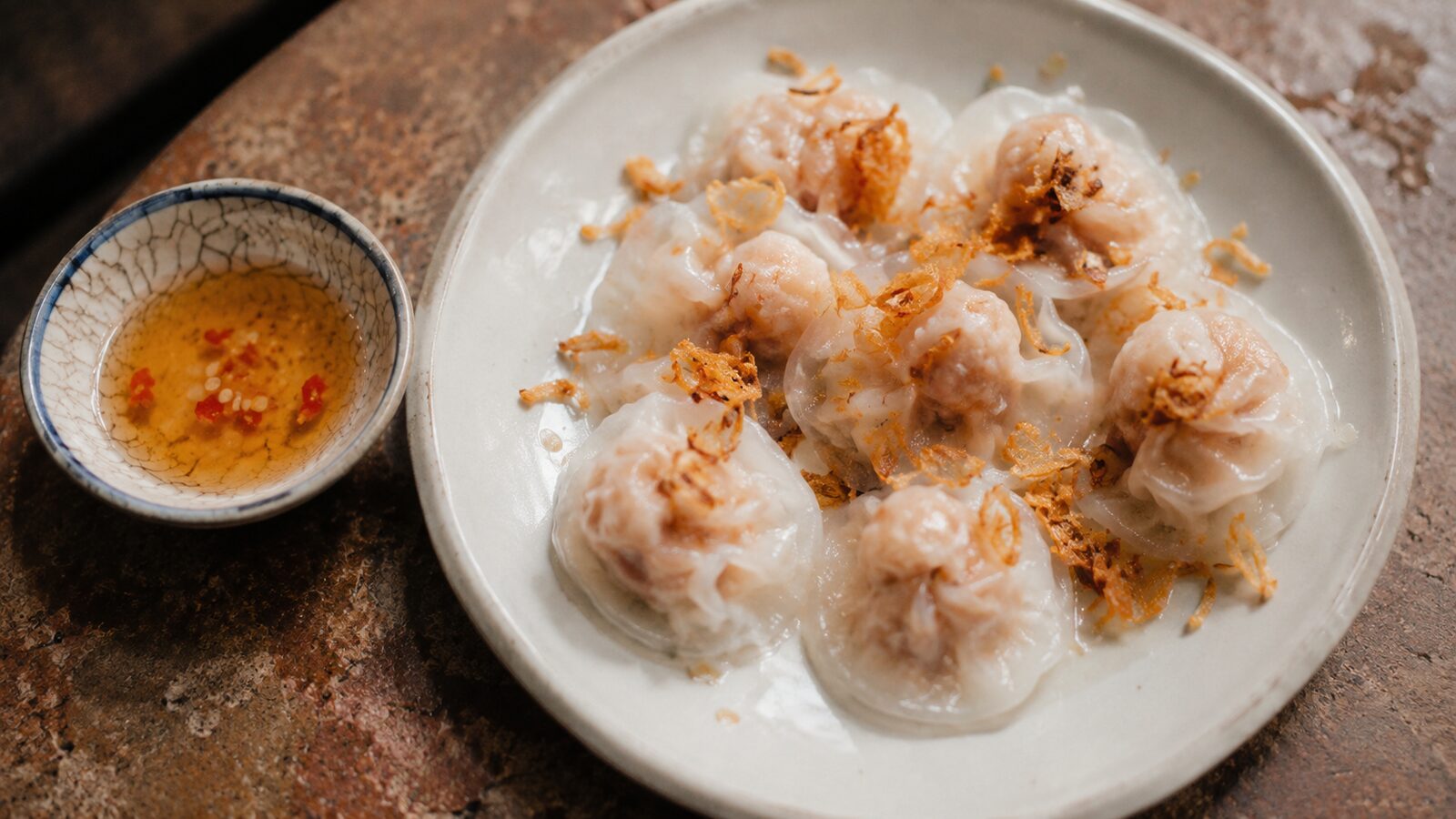
Order white rose once and you'll understand the name before anyone explains it. A small white plate arrives carrying a dozen translucent dumplings, each one pinched and folded so the edges ruffle outward like the petals of a flower just beginning to open. Over the top: a shower of deep-gold crispy shallots. To the side: a little bowl of pale dipping sauce. It's the kind of dish people photograph before they taste, and then, thankfully, actually taste.
Its Vietnamese name is bánh bao bánh vạc, and, echoing the English, it's also known as bánh bông hồng trắng, which translates literally as "white rose." By either name, it's one of the truest things you can eat in Hội An: a dish so local it barely exists in recognisable form anywhere else in Vietnam.
What's actually on the plate
White rose is really two dumplings served as a pair. The bánh bao are small, rounded, and filled with seasoned minced shrimp. The bánh vạc are shaped more like little shells or half-moons, usually filled with a savoury mix of pork and mushroom. Both are wrapped in the same wafer-thin rice-flour dough, pressed until it turns translucent enough to hint at the filling inside.
The magic is in three textures landing at once: the slippery, tender wrapper; the springy, sweet-savoury filling; and the crackle of fried shallots on top. The dipping sauce ties it together, a light, slightly sweet fish-based sauce brightened with lime and a little chilli, gentle enough that the delicate dumplings still come through.
It looks fragile and fussy. It eats like comfort food.
Why it only really happens here
Like the town's famous cao lầu noodles, white rose is tied to Hội An itself. The dough is traditionally made with local water and worked by hand, rice flour kneaded, rested and pressed thin without tearing, a skill that takes years to get right. That craft, more than any single ingredient, is why the dish resists being copied convincingly elsewhere.
And here's the part that delights first-timers: by long-standing tradition, white rose is made almost entirely by one Hội An family, who prepare the dumplings fresh each day and supply restaurants all over town. So when you order white rose at two completely different restaurants, there's a very good chance both plates were shaped by the same hands that morning. The restaurants steam them, plate them, fry their own shallots and mix their own sauce, but the dumplings themselves trace back to a single kitchen. It's a small, lovely example of how tightly Hội An's food culture is woven together.
💡 How to eat it
One dumpling per spoon, a little sauce, and, if you like, a pinch of the crispy shallots dragged along for the ride. Don't drown them; the sauce is a seasoning, not a soup. It's a starter or a sharing plate, not a main, so order it alongside other dishes rather than on its own.
How it compares to other Hội An dumplings
| Plate | What it is | Texture |
|---|---|---|
| White rose (bánh bao bánh vạc) | Steamed translucent rice-paper dumplings, shrimp & pork | Soft, slippery, delicate |
| Fried wontons (hoành thánh) | Crispy fried wonton crackers with a shrimp-tomato topping | Crunchy, bright |
| Fresh spring rolls (gỏi cuốn) | Cold rice-paper rolls of herbs, noodle & prawn | Cool, fresh, chewy |
Good to Know
🌸 Before you order white rose
- It's a sharing plate. Order it as part of a spread, not as a solo meal.
- Dietary needs: the shrimp and pork versions usually come together, ask if you need to avoid one.
- Freshest early. Because it's made and delivered daily, earlier in the day often means fresher dumplings.
- Pair it with a lighter dish; its subtlety gets lost next to anything heavily spiced.
- New to the cuisine? It's one of the gentlest, most approachable things on any Hội An menu.
Common mistakes
- Treating it as a main. It's a delicate starter or side, you'll leave hungry if it's your whole meal.
- Drowning it in sauce. The dip is a light seasoning; too much buries the dumpling.
- Expecting a "rose" flavour. The name is about the shape, not any floral taste.
- Skipping the shallots. That crispy top is half the pleasure, don't scrape it off.
Frequently asked questions
What is white rose in Hội An?
A specialty of delicate translucent rice-paper dumplings, one filled with seasoned shrimp, another shell-shaped with pork and mushroom, topped with crispy fried shallots and served with a light dipping sauce. The name refers to the flower-like shape.
Why is it called white rose?
The pleated, translucent dumplings resemble the petals of a small white flower. The English name is said to have been coined by a French visitor in the 1990s; in Vietnamese the same idea is captured by bánh bông hồng trắng, literally "white rose."
Does one family really make it all?
By long tradition, the dumplings are made largely by a single Hội An family who supply many restaurants across town fresh each day, which is why the dish is so consistent and hard to find authentically elsewhere.
Is there pork in it or just shrimp?
Usually both, served together: shrimp in the rounded bao, pork and mushroom in the shell-shaped vạc. Ask your restaurant if you need one or the other.
The short version
White rose is Hội An in miniature: delicate, hand-made, deeply local, and communal, one family's craft, shared across a whole town's tables. Order it early, share it, keep the sauce light, and let the shallots do their work. Then move on to a bowl of cao lầu and keep exploring.
If you'd like white rose the way the town intends it
White rose is best as one plate in a wider, shared meal. If you're near Cửa Đại beach and want to try it alongside other Hội An specialties, seafood and vegetarian options, with something familiar for anyone who wants it, AN Restaurant & Bar sets that kind of relaxed, mixed table.
AN Restaurant & Bar · 56 Phan Tinh, Cửa Đại, Hội An · A Taste of Two Homes