Hội An · Coffee
The Hội An Coffee Guide: What to Drink, How It's Made, and Where to Sit
Vietnamese coffee isn't a weaker cousin of the espresso you know. It's its own bold, sweet, slow-dripped world, and Hội An is a wonderful place to fall into it.
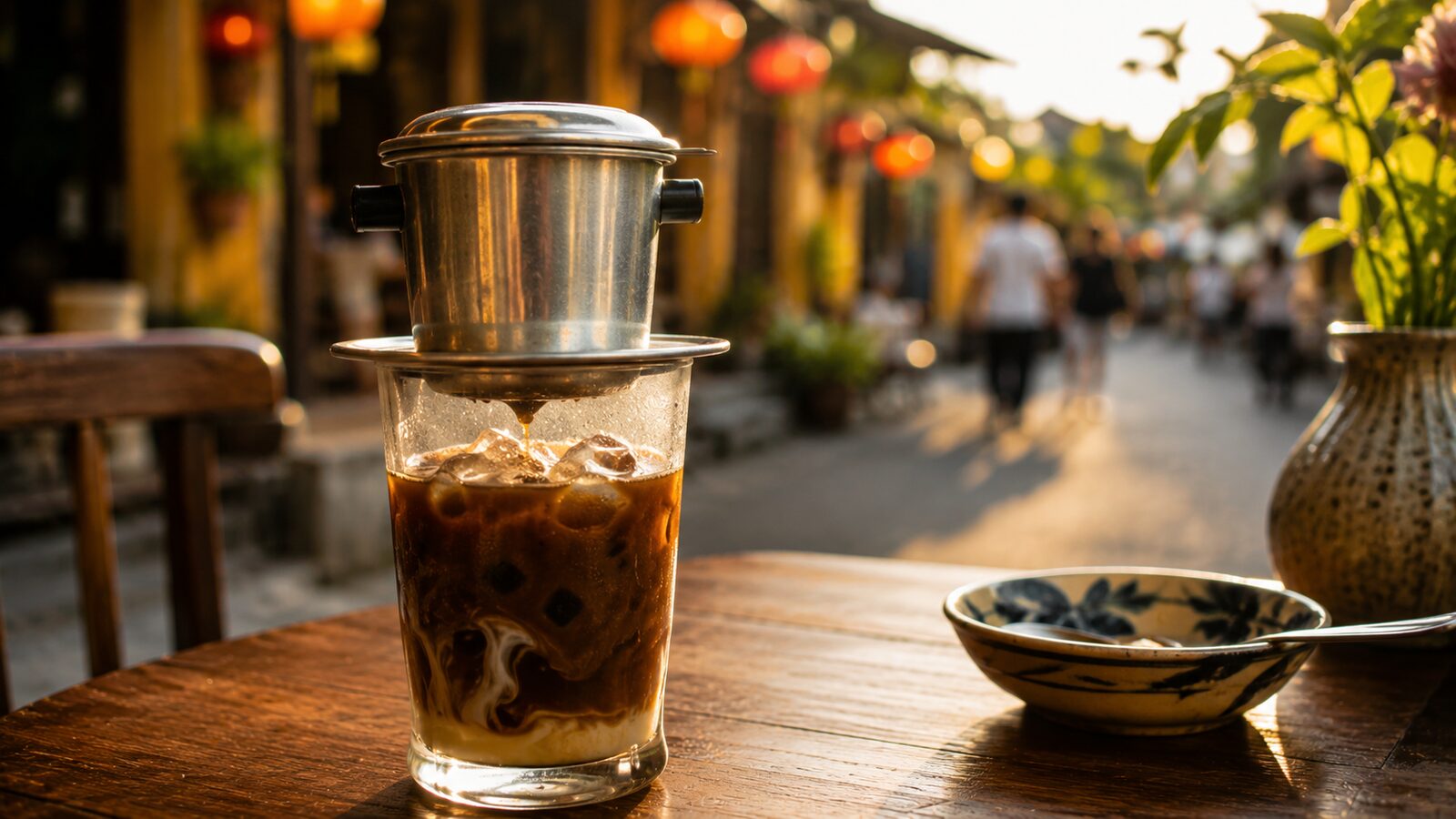
The first sip of proper Vietnamese coffee tends to stop people mid-sentence. It's darker, thicker and more intense than almost anything in a Western café, and then the sweetness of the condensed milk arrives and rounds it all off, and suddenly you understand why an entire country is built on the stuff. Vietnam is one of the world's great coffee producers, and drinking it here, slowly, watching the little filter drip, is one of the simplest pleasures the country offers. Hội An, with its lantern-lit lanes and garden cafés, is an ideal place to learn it.
How Vietnamese coffee works
Two things make it distinctive. First, the bean: Vietnamese coffee is usually robusta, grown in the country's Central Highlands, higher in caffeine and bolder, more bitter and chocolatey than the arabica most Westerners are used to. Second, the method: a small metal drip filter called a phin sits on top of your glass and lets the coffee drip through slowly, producing a concentrated, powerful brew. Add sweetened condensed milk (a legacy of when fresh milk was scarce) and ice, and you have the national drink.
Order it, then wait. Watching the phin drip is part of the ritual, Vietnamese coffee rewards the unhurried.
What to order
The menu can look cryptic. Here's the decoder for the drinks you'll actually want.
| Order this | What it is | Good for |
|---|---|---|
| Cà phê sữa đá | Iced coffee with condensed milk | The essential starting point |
| Cà phê đen (đá) | Black coffee (iced), no milk | Purists; very strong |
| Bạc xỉu | More milk, less coffee, mild & sweet | Easing in; afternoons |
| Cà phê cốt dừa | Coconut coffee, blended, creamy, iced | The crowd-pleasing treat |
| Cà phê trứng | Egg coffee, whipped egg-cream top (a Hanoi classic) | Dessert in a cup |
| Cà phê muối | Salt coffee (a Huế specialty, now everywhere) | Salted-caramel lovers |
Start with cà phê sữa đá, it's the benchmark. If you want a treat, coconut coffee is the reliable delight. And if you're curious, egg coffee (originally a Hanoi invention) is a small, rich, custardy marvel that tastes more like dessert than a drink.
💡 A quick word on "weasel coffee"
You'll see cà phê chồn, weasel or civet coffee, marketed hard to tourists as a luxury. Two honest notes: much of what's sold isn't the real thing, and traditional production using caged civets raises genuine animal-welfare concerns. Our advice is simple: skip it and put your money into a beautifully made cà phê sữa đá instead. You won't miss anything.
Where to drink it in Hội An
Hội An takes its café culture seriously, the town has well over a hundred cafés, and the pleasure is as much about the setting as the cup. Three moods to seek out:
- Riverside & Ancient Town: lantern views and people-watching, ideal after an evening stroll (see the Ancient Town guide).
- Garden & rice-paddy cafés: greenery, birdsong and shade just outside the centre, the spot for a slow morning or an afternoon with a book.
- Beach-side: a coconut coffee near Cửa Đại or An Bàng, sea air included.
Coffee is also the perfect second act to a local breakfast, and the ideal way to wait out a rainy afternoon. It's woven into the whole day here, not confined to the morning.
Good to Know
☕ Coffee in Hội An
- Start with cà phê sữa đá, the sweet, strong, iced classic.
- It's robusta & potent, one is plenty; go easy late in the day.
- Coconut coffee is the reliable treat; egg coffee the fun experiment.
- Setting matters, pick a garden, riverside or beach café and linger.
- Skip "weasel coffee", welfare concerns and often fake.
Common mistakes
- Expecting a mild, Western-style cup. Robusta is bold and strong; that's the point, not a flaw.
- Rushing it. The phin drips slowly on purpose, let it, and enjoy the pause.
- Over-caffeinating. It's potent; a second in the afternoon can cost you your sleep.
- Falling for the weasel-coffee pitch. Not worth the money or the ethics.
- Treating cafés as grab-and-go. Here the café is the destination, sit, don't sprint.
Frequently asked questions
What is Vietnamese coffee?
Strong, dark robusta brewed slowly through a small metal filter (a phin), usually served over sweetened condensed milk and ice as cà phê sữa đá. Robusta from the Central Highlands gives it its bold, punchy character.
What should I order in Hội An?
Start with cà phê sữa đá. For something creamier, coconut coffee (cà phê cốt dừa); for black, cà phê đen; for lighter and milkier, bạc xỉu. Egg coffee (cà phê trứng), a Hanoi specialty, appears in many cafés too.
Why is it so strong?
It's usually robusta, more caffeine and a bolder, more bitter flavour than arabica, and brewed slow and concentrated. The condensed milk balances that intensity with sweetness.
Is weasel/civet coffee worth trying?
Generally no. Much of it isn't genuine, and traditional caged-civet production raises real animal-welfare concerns. A well-made cà phê sữa đá is the better choice.
The short version
Vietnamese coffee is bold robusta, slow-dripped through a phin and sweetened with condensed milk, strong, sweet and utterly its own thing. Start with a cà phê sữa đá, branch into coconut or egg coffee for fun, skip the touristy weasel coffee, and, most importantly, pick a café with a view or a garden and let yourself linger. In Hội An, coffee isn't a caffeine errand; it's one of the best hours of the day.
Round off a meal the local way
A proper Vietnamese coffee is the perfect full stop to lunch or dinner. If you're eating near Cửa Đại, AN Restaurant & Bar is a relaxed spot to linger over one after a plate of Hội An specialties or fresh seafood.
AN Restaurant & Bar · 56 Phan Tinh, Cửa Đại, Hội An · A Taste of Two Homes